 LinkBack URL
 About LinkBacks
Como un campeón. Voy a buscar el modelo de silla de ruedas, tiene buena pinta.
 ¡Bienvenido a mundodvd! Regístrate ahora y accede a todos los contenidos de la web. El registro es totalmente gratuito y obtendrás muchas ventajas.¡Bienvenido a mundodvd! Regístrate ahora y accede a todos los contenidos de la web. El registro es totalmente gratuito y obtendrás muchas ventajas.


 Re: Bandas sonoras
Como un campeón. Voy a buscar el modelo de silla de ruedas, tiene buena pinta.
What makes Megalopolis so strange and, for a big-budget Hollywood film, so singular, is that, just like Vergil’s Aeneid, it is at once accretive, allusive, and idiosyncratic because Coppola is attempting something very few artists have ever done: to speak from inside the imperial organism, even as it begins to crack, and to craft a vision that is both a monument to its grandeur and a requiem for its decline.
Re: Bandas sonoras
What makes Megalopolis so strange and, for a big-budget Hollywood film, so singular, is that, just like Vergil’s Aeneid, it is at once accretive, allusive, and idiosyncratic because Coppola is attempting something very few artists have ever done: to speak from inside the imperial organism, even as it begins to crack, and to craft a vision that is both a monument to its grandeur and a requiem for its decline.
Re: Bandas sonoras
Un poco más de la música de Williams para la película (los cortes believe y celestial)

Última edición por Branagh/Doyle; 05/06/2026 a las 18:32
What makes Megalopolis so strange and, for a big-budget Hollywood film, so singular, is that, just like Vergil’s Aeneid, it is at once accretive, allusive, and idiosyncratic because Coppola is attempting something very few artists have ever done: to speak from inside the imperial organism, even as it begins to crack, and to craft a vision that is both a monument to its grandeur and a requiem for its decline.
 Re: Bandas sonoras
En la premiere más reciente
Steven Spielberg says that John Williams' score for ‘DISCLOSURE DAY’ is more subtle than his previous scores.
“He said ‘this time I’m going to write music not to lead the film, I’m going to write music under the film to give it the slight nudge forward.’”

 Re: Bandas sonoras
Qué preciosidad de tema, la parte incial, supongo que Believe, me ha recordado a otro momento donde prima eso el creer, cuando en E.T., éste escucha desde el armario, la lectura que hacen madre e hija de Peter Pan y del creer en las hadas. Y el final, Celestial, me ha hecho pensar en la elegancia desplatiana cuando compone estos temas tipo vals.Iniciado por Branagh/Doyle

Saludos
Q: "I'm your new quartermaster"
007: "You must be joking"
_______________________
CLAUDIO: "Lady, as you are mine, I am yours"
_______________________
EISENSTEIN: "I'm a boxer for the freedom of the cinematic expression" -"I'm a scientific dilettante with encyclopedic interests"
Re: Bandas sonoras
Esto es tremendo. No recordaba que fuese tan buena. Newman podría haber ganado el Oscar perfectamente, a mi juicio.
What makes Megalopolis so strange and, for a big-budget Hollywood film, so singular, is that, just like Vergil’s Aeneid, it is at once accretive, allusive, and idiosyncratic because Coppola is attempting something very few artists have ever done: to speak from inside the imperial organism, even as it begins to crack, and to craft a vision that is both a monument to its grandeur and a requiem for its decline.
Re: Bandas sonoras
Ya se puede hacer el preorder del CD de Disclosure Day en Musicbox, lo que nos viene mucho mejor a los europeos.
Acabo de hacer el pedido.
What makes Megalopolis so strange and, for a big-budget Hollywood film, so singular, is that, just like Vergil’s Aeneid, it is at once accretive, allusive, and idiosyncratic because Coppola is attempting something very few artists have ever done: to speak from inside the imperial organism, even as it begins to crack, and to craft a vision that is both a monument to its grandeur and a requiem for its decline.

 Re: Bandas sonoras
Hacia bastante tiempo que no compraba CD’s de bandas sonoras. En los últimos años me he centrado mucho en servicios de streaming como el de Apple, y en vinilos (algunos exclusivos de mondo, otros que me interesaban especialmente, como las recientes ediciones de Indiana Jones, etc…), pero el otro día eché un vistazo a la web de Intrada, y aprovechando que iba a hacer un pedido a USA, encargué tres de ellos:
Me interesaba especialmente el de Flatliners, pues es un score de Newton Howard bastante “maltratado” en cuanto a ediciones se refiere, y que no había salido de forma oficial hasta el año pasado. Recuerdo que hubo un bootleg pululando por ahí a principios de los 2000 con una decena de temas y poco más, con una calidad bastante paupérrima.
A ver si saco un poco de tiempo libre para disfrutarlos
Un saludo.
Última edición por Dr. Morbius; 06/06/2026 a las 10:52
Terrence Malick: “Nunca he sido capaz de trabajar con storyboards.
Es como meter un cubo por un agujero redondo”.
 Re: Bandas sonoras
Hace tiempo que tenía cosas que decir en este hilo.
Iba a decir que hace mucho que no aparecen bandas sonoras en CD de películas españolas, pero va y aparecen las de Sirât y Amarga Navidad, aunque claro faltan muchísimas, y ya me hubiera gustado pillar las de Mortadelo y Filemón, que solo salió la de la primera peli de Fesser.
Pues de casualidad pillé la de El Gran Vázquez y Ghostbusters en Fnac, y luego la de Ghostbusters II en ECI, que aún me pregunto por qué le dedican todavía espacio a música en CD y vinílos y en muchos centros ya nada a películas. Y los malditos Funko acaparando mucho espacio.
Lo malo es que seguro que hay versiones más extendidas de estos soundtracks de Cazafantasmas, que muchas veces no basta con un disco, que suena constantemente música en la película, y si sobra meten versiones alternativas o temas descartados. Lo peor es que estén muy limitadas y tenga que pedirse obligatoriamente por internet, como muchos otros productos que no están al alcance de la mano, que mira que habré comprado algunas cosas que quizás podría haber encontrado más baratas pero las tenía delante y no tendría que sufrir por el envío.
Así lanza Lalaland Record Spectre, igual que ha hecho con otros soundtracks de James Bond, expandidos pero no removidos, aunque Goldfinger sólo tenía un disco, quizás no daba para más. Y mira que había que hacerle justicia a varias de estas películas, que en la colección James Bond 007 Remastered, que abarcaba las 15 primeras películas oficiales y Goldeneye, algunos CDs tenía nuevos temas, pero otros seguían igual que hace décadas, como Moonraker que apenas tenía media hora.
Antes había visto ediciones expandidas de las últimas 5 películas de 007 que resultan ser piratas, que según una base de datos que encontré llamada discogs.com y que quizás ya conozcáis, aparecen como "Unofficial Release", y esta y otras que ofrecen en ebay pone que son de Spain.
Y es que ebay se ha llenado de ediciones ilegales, tanto de música como películas y series, que ya piqué con lo de Indiana Jones and the Dial of Destiny, pero también de ediciones en las que pone "FYC", siglas de "For Your Consideration", que quiere decir "Para Su Consideración", que envían a académicos para que los tengan en cuenta para votarlos en Oscars, Emmys, Grammys o lo que sea, y a veces son las únicas ediciones en físicos legales aunque se considere su venta ilegal.
Re: Bandas sonoras
Pues habiendo visto He-Man y los Masters del Universo, si, afirmo con rotundidad que Pemberton ha ido a pasarselo pipa e incluso co-escribe la cancion final de los creditos.
Es un score que basicamente es consciente desde su primer minuto de busqueda del homenaje a los 80s: un score de rock sinfonico, con influencia totalmente de Queen (que no es baladi, no solo por Brian May -por cierto, la coña es que su guitarra es referida por el propio Pemberton, de forma directa e indirecta como la 'espada del poder'-, hay otro detalle) y que no busca ningun elemento de sutileza u una profunda dramaturgia.
Un score de enfatizacion y de claro espiritu de diversion, no es que sea rico tematicamente, tiene cuatro temas principales, el de la propia Eternia, fusionado de forma directa con el tema de Adam, la propia Espada, Man-at-Arms y el propio Skeletor, cuyo material es digamos, lo mas convencional del material. Pero en su conjunto, es un trabajo notable que entiende su propia consciencia al proyecto en cuestion, la utilizacion del tema original de la serie, no solo es que sea un guiño, es como una realizacion definitiva al personaje en su final de la aventura.
Re: Bandas sonoras
Que dice Jeff Russo que ha usado la música de Bernard Herrmann en Cape Fear para la nueva miniserie homónima (la ha reorquestado y adaptado como hizo Elmer Bernstein en 1991), pero lo que sucede es que como la miniserie es mucho mas larga que una pelicula (logicamente), ha tenido que componer un montón de musica original en el estilo de la música de Herrmann para el film de 1962, e integrarla con las composiciones originales de Herrmann.
Muy interesante. Esperemos que editen un album y podamos escucharlo pronto. Me encantó su trabajo en Alien Earth.
What makes Megalopolis so strange and, for a big-budget Hollywood film, so singular, is that, just like Vergil’s Aeneid, it is at once accretive, allusive, and idiosyncratic because Coppola is attempting something very few artists have ever done: to speak from inside the imperial organism, even as it begins to crack, and to craft a vision that is both a monument to its grandeur and a requiem for its decline.
 Re: Bandas sonoras
Por un lado, mal por no tratar de hacer algo nuevo y repetir la jugada del remake de Scorsese.
Por otro lado, bien porque la música de Bennie es una maravilla. La versión de Bernstein en los cines sonaba como un tiro. Te dejaba clavado en el asiento.
Ya puestos, en lugar de hacer pastiches, Jeff Russo podría reutilizar/adaptar más música de Herrmann. Eso podría ser la caña. Pero entiendo que, para cualquier compositor, jugar a ser Herrmann es demasiado divertido para dejarlo pasar.
Re: Bandas sonoras
El poderío que tiene Herrmann que en las dos nuevas versiones su música se mantiene, al igual que en la Psicosis colorista de Van Sant.
Que eso pasa también con Williams, pero diría que solo con sus temas principales, no con un score completo.
Saludos
Q: "I'm your new quartermaster"
007: "You must be joking"
_______________________
CLAUDIO: "Lady, as you are mine, I am yours"
_______________________
EISENSTEIN: "I'm a boxer for the freedom of the cinematic expression" -"I'm a scientific dilettante with encyclopedic interests"
Re: Bandas sonoras
Reseña de Pawel P en Jwfan de Disclosure Day.
Just got back from the cinema.
Without getting into spoilers, I thought the film was excellent – genuinely big-screen Spielberg. There’s a lot going on, and I already know I need a second viewing to fully process it all. Someone wrote somewhere that the film lacks humor. I honestly have no idea what they were talking about. And when it comes to action, Spielberg still knows exactly how to stage a chase.
As for the score, there is quite a lot of music in the film. Early on it tends to appear in shorter passages, while the second half features more extended musical sequences. That said, this is not a score-driven film in the way Star Wars, Harry Potter or even some of Spielberg's earlier collaborations with Williams are. Williams is a little more in the background here than some people may expect – but I absolutely do not mean that as criticism.
There are two or three action moments in classic Williams fashion, but don't go in expecting anything on the scale of "Anderton's Great Escape". That's simply not what this score is about. Still, in a few places Williams reminds us that he hasn't forgotten how to get the pulse racing.
What struck me most was the thematic material. There is a beautiful horn theme – though not in an obvious, immediately attention-grabbing way – that becomes more prominent later in the film, and I'm very curious to hear how it develops on the album. There is also a lighter scherzo-like idea that caught my attention immediately. I found myself wondering whether it receives a more substantial development on the soundtrack release.
The score also features some delicate choral writing that occasionally brought A.I. to mind. Not huge, operatic choral statements, but something much more intimate and ethereal. Pure Williams.
Another thing I noticed was a theme that, at least to my ears, had a certain "Cinque's Theme" quality to it, accompanied by a female vocalise. I'd be very curious to revisit those passages on album, because they made quite an impression in the context of the film.
There is also one particularly emotional cue before the finale, strongly centered around the piano, that absolutely floored me. One of those moments where the emotional impact of the music becomes almost overwhelming.
"listen..." appears during the end credits, but what really stayed with me was what follows afterwards, when that beautiful A.I.-like theme returns in all its glory, enriched by a delicate chorus. It was one of the musical highlights of the entire experience.
As for the finale itself, I wouldn't compare it to Close Encounters or E.T. in terms of musical spectacle. However, there were moments when I became so immersed in what was happening on screen that I almost stopped consciously listening to the score, while at the same time feeling that the music was doing exactly what it needed to do. Had it done more, some people might well have accused Williams of pushing the music too hard in moments that didn't require it.
Right now, the only thing I'm thinking about is going back to the cinema on Wednesday or Thursday – partly to hear the score again before Friday's soundtrack release, but also because I simply want to experience the film one more time on the big screen.
And I absolutely cannot wait for the album. I'm convinced it will reveal even more than the film does and that there is still a great deal left to discover.
What makes Megalopolis so strange and, for a big-budget Hollywood film, so singular, is that, just like Vergil’s Aeneid, it is at once accretive, allusive, and idiosyncratic because Coppola is attempting something very few artists have ever done: to speak from inside the imperial organism, even as it begins to crack, and to craft a vision that is both a monument to its grandeur and a requiem for its decline.
Re: Bandas sonoras
Es que lo de Herrmann es acojonante. En el mejor de los sentidos.
Re: Bandas sonoras
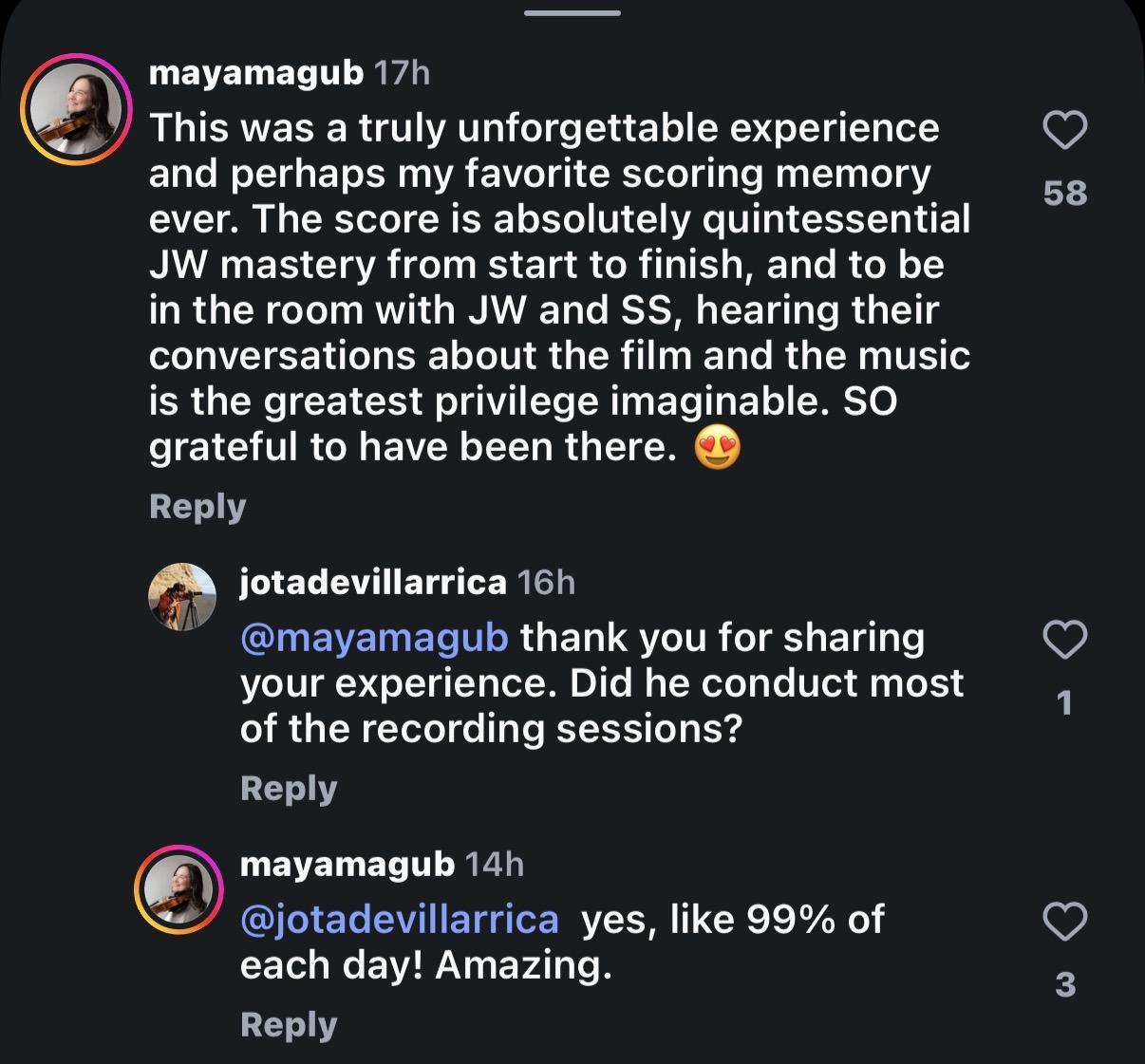
Banda sonora de Disclosure Day completa.
What makes Megalopolis so strange and, for a big-budget Hollywood film, so singular, is that, just like Vergil’s Aeneid, it is at once accretive, allusive, and idiosyncratic because Coppola is attempting something very few artists have ever done: to speak from inside the imperial organism, even as it begins to crack, and to craft a vision that is both a monument to its grandeur and a requiem for its decline.
Re: Bandas sonoras
Disclosure Day es, como ya nos avanzaba Spielberg, una banda sonora que se caracteriza por su contención y mesura. Es un trabajo que podríamos definir como otoñal, pero esa placidez casi beatifica (las orquestaciones son las mas transparentes, limpias y depuradas de la carrera de Williams en muchos, pero que muchos años, no sobra ni una nota), se ve atravesado casi constantemente por tensión y suspense, que, en términos musicales, supone el grueso del score. Largos pasajes rítimicos con presencia bastante importante del sintetizador que recuerdan inevitablemente a Minority Report, se alternan con el lirismo antes mencionado (incluyendo unos coros y voz solista femenina), todo ello salpicado con puntuales -muy muy puntuales- momentos de acción.
Estilisticamente la partitura, supone una mezcla entre Inteligencia Artificial, Las Cenizas de Angela, Minority Report y La Guerra de los Mundos (esta última exclusivamente para los segmentos de acción, muy breves).
¿Es un score temático? Bueno, hay un tema principal perfectamente identificable que Williams varía y desarrolla, pero en su mayor parte, es un score motivico en el que priman el ritmo y las texturas muy por encima de lo melodico.
Concluyo por tanto que aburrirá a la mayoría, que certificará que Williams ha vivido tiempos mejores y ya está en decadencia, lamentando especialmente la ausencia de espectacularidad orquestal y temas tarareables.
A mí, en cambio, me ha encantado, e incluso sorprendido. Un trabajo crepuscular y reflexivo para degustar con calma varias veces.
Última edición por Branagh/Doyle; 10/06/2026 a las 23:15
What makes Megalopolis so strange and, for a big-budget Hollywood film, so singular, is that, just like Vergil’s Aeneid, it is at once accretive, allusive, and idiosyncratic because Coppola is attempting something very few artists have ever done: to speak from inside the imperial organism, even as it begins to crack, and to craft a vision that is both a monument to its grandeur and a requiem for its decline.
Re: Bandas sonoras
What makes Megalopolis so strange and, for a big-budget Hollywood film, so singular, is that, just like Vergil’s Aeneid, it is at once accretive, allusive, and idiosyncratic because Coppola is attempting something very few artists have ever done: to speak from inside the imperial organism, even as it begins to crack, and to craft a vision that is both a monument to its grandeur and a requiem for its decline.
Re: Bandas sonoras
Mis primeras impresiones sobre la banda sonora se circunscriben única y exclusivamente a la edición discográfica de la partitura. Cuando vea la película (lo que, si todo va bien, espero que ocurra este fin de semana), ampliaré y/o matizaré mis palabras.
Si puedo decir lo siguiente: se merece prestarle atención con calma, porque suceden muchas mas cosas, a nivel musical, de las que pueda parecer a simple vista (u oido), muchas de ellas a un volumen no muy elevado. El uso del arpa es cautivador, y es interesante comprobar como casi no hay trompetas en este score. Sorprende la abundancia de sitentizadores, pero están empleados maravillosamente y muy bien combinados con la orquesta.
Es un trabajo de absoluta madurez fascinante, con ninguna concesión comercial. Y ahora yo me pregunto ¿si Williams no le ha dado al gran público lo que espera (a nivel musical), tampoco lo habrá hecho Spielberg? Este fin de semana lo averiguaré.
What makes Megalopolis so strange and, for a big-budget Hollywood film, so singular, is that, just like Vergil’s Aeneid, it is at once accretive, allusive, and idiosyncratic because Coppola is attempting something very few artists have ever done: to speak from inside the imperial organism, even as it begins to crack, and to craft a vision that is both a monument to its grandeur and a requiem for its decline.
Re: Bandas sonoras
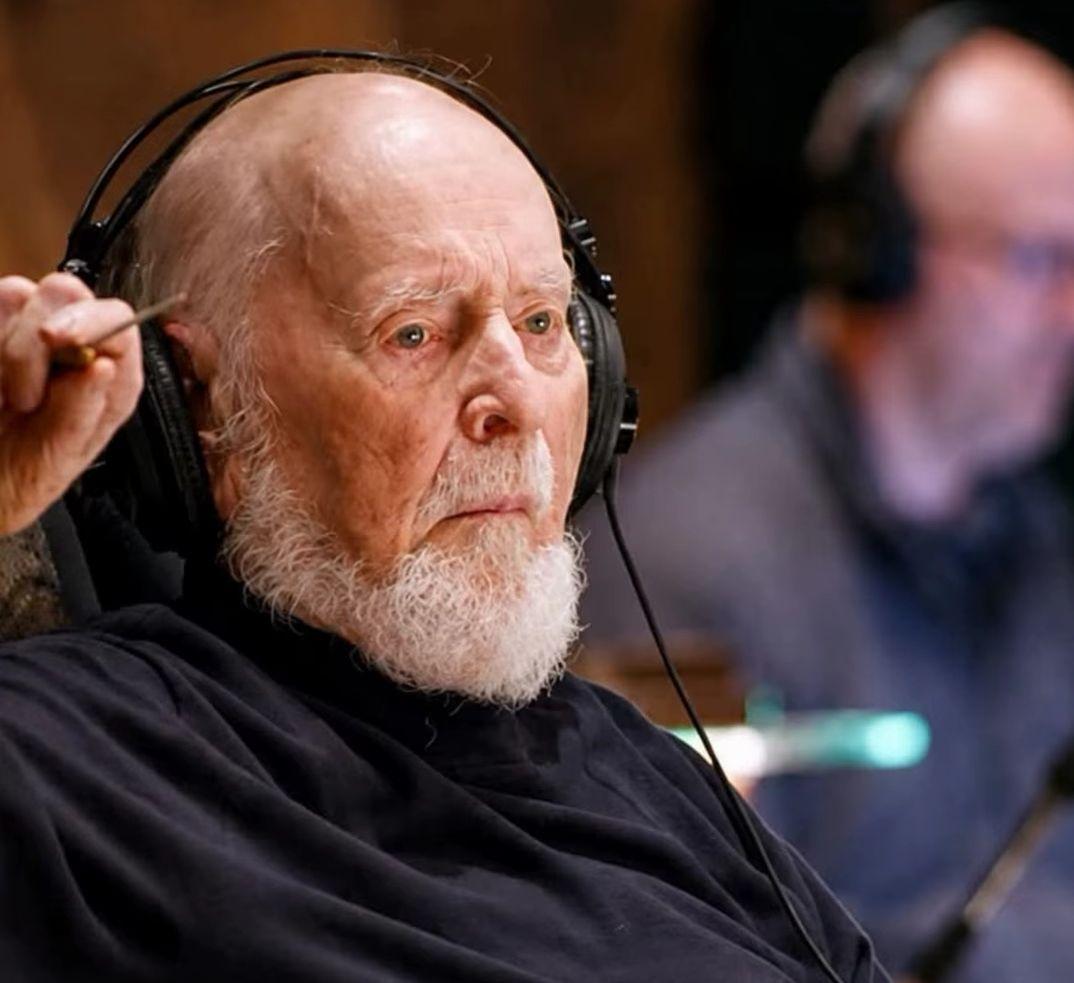
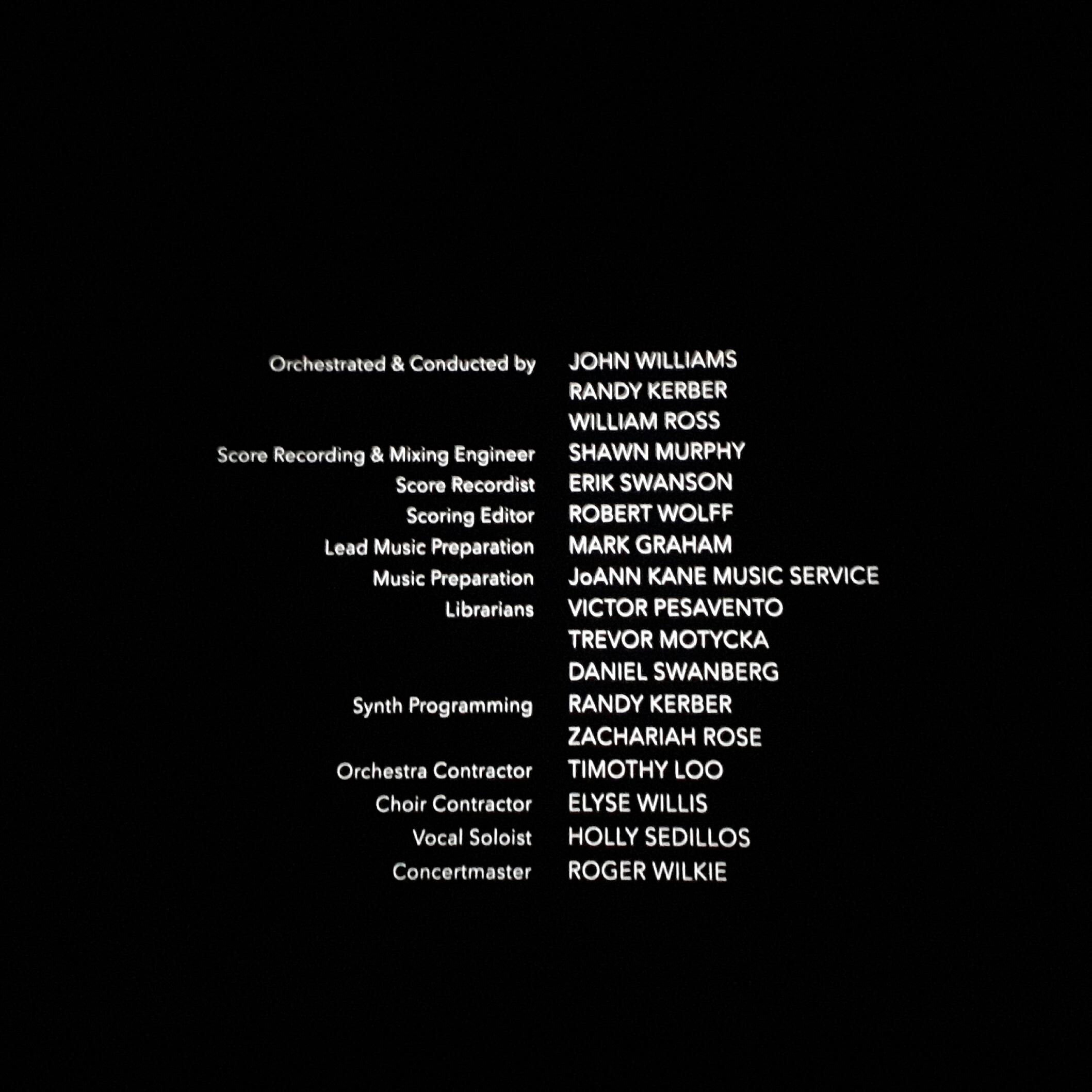
Mikko Ojala analiza el score de John Williams:
Disclosure Day is the 30th collaboration between Steven Spielberg and John Williams, one of the most enduring and celebrated collaborations between a director and composer in cinema history. Spielberg himself seems to be still going strong and continues to direct and produce at 79 and perhaps even more amazingly John Williams still at 94 has composed a lengthy score for this new science fiction outing. This director/composer pairing has quite a legacy where sci-fi cinema is concerned having brought us classics like Close Encounters of the Third Kind and E.T. – The Extra-Terrestrial, where Williams’ indelible scores were a huge part of the narrative and success of the movies. The duo also later in their career has taken us to the far future in their part sci-fi part fairy tale A.I. – Artificial Intelligence with a ruminative, eclectic score emotionally rooted in gentle melodies, and also explored the darker side of a first contact with aliens in War of the Worlds, where the music formed a dark undercurrent and aggressive, primal force which propelled the narrative along and mourned the Humanity suffering in the hands of the alien invaders.
It might bear repeating that having the grand Maestro of film music himself still composing (and conducting!) at the age of 94 is a small miracle and each new film score or musical creation from him is a true blessing. But while I evoked Close Encounters and E.T. above, it has to be said to temper the expectations a bit, as this new score is a very different beast in scope and style than those collaborations. Reportedly Spielberg and Williams both decided that the music for Disclosure Day should work underneath or behind the film rather than to take the forefront or lead it, and the result sounds very much like a modern era Spielberg/Williams collaboration in the vein of early 2000s Minority Report and War of the Worlds with a dash of A.I. – Artificial Intelligence thrown into the mix. Typically for Williams, the score is written for a standard symphonic ensemble, and many sections of the soundtrack are surprisingly intimate and small scale; Williams has given several instruments, such as piano, harp, oboe, horn and timpani solo parts throughout the score. Williams blends this traditional orchestral writing here and there with synthesizer/electronica effects that mostly provide the beats and pulses that drive the suspense and action and infuse the music with some modern scoring sensibilities.
The album opens with the aptly named listen… which certainly grabs your attention as it introduces a noble, yearning theme on solo horn that is taken over by the impassioned strings and developed in a concert suite like manner, passing the idea through the orchestra and extending it into a wonderful elegiac meditation. No wonder this piece was released as a single before the film and the soundtrack album came out. It is beautiful and directly emotional piece of refined modern Williams writing. As ever the composer’s melodic gifts are on full display here, however in this score some of his themes seem to function more as individual singular melodies on the album rather than systematically integrated into the fabric of the score or repeated on subsequent tracks. Such is also the fate of the theme from listen… Apart from a short hummed quote heard on the track in vivo…it is only heard again in the reprise…also first hummed by a female soloist and then in a modern, ostinato driven, brass punctuated setting, which actually works quite nicely as a bookending musical idea for the album.
The second track memories… introduces the second major musical idea featured in the score itself, a dreamy, gentle theme, which is performed first haltingly on piano and then sung out by solo horn and explored by harp and flute over strings. It is a searching, a bit elusive, nostalgic, childlike tune very much in the style of A.I.-Artificial Intelligence. It is further explored here and there in snippets throughout the album, but most noticeably in the latter half of the lengthy and appropriately heavenly sounding celestial…The track opens with beautiful, luminous, wordless female choral writing, until in the latter half the memories melody is intoned by a solo horn and then by glockenspiel with gorgeous harp accompaniment to a wonderful effect. Again, this piece reminded me of similarly styled music in A.I. – Artificial Intelligence and it is one of the highlights of the album.
Third notable melodic idea of the album appears in empathy…and is a sorrowful, heartbreaking theme starting on a simple piano and growing into another gorgeous string elegy that is full of the direct, affecting emotionality that the composer seems to be able to conjure with such seeming ease. It is only tempered by its brevity here as yet again this seems to be another one-off melody, which Williams then uses to form the final part of his end credits in reprise…
In believe… Williams again writes singular, beautiful, simple musical idea, where a lilting piano over string accompaniment is ascending through the melody somewhere between hopeful and bittersweet. Wonderful stuff. But then the track makes a complete 180-degree turn and suddenly launches into a short statement of one of those classic Williams fugato marches for strings, that certainly seems to hint at skulduggery and military presence.
The suspense and action music in the score is very much in the modern Williams vein, meaning that these pieces take their cue from the dark, sustained low string sounds and synth embellishments and the propulsive, kinetic scoring style of his 2000s action writing that largely forgoes melodies in favour forward momentum and quick changing motivic ideas. First example of this suspense and intrigue is the dive… which opens with long mysterious string and brass lines and synth pulses that proceed to terrific intrigue-laden, jittery col legno and pizzicato passages from the lower string section and ethereal synth effects. in vivo…builds a mysterious, slightly chilling atmosphere through sustained high strings, piano, harp, and female chorus until a brief female soloist hummed quote of the listen theme rears its head towards the end. Negotiation… from the other end of the sonic spectrum is pure atmosphere as it churns slowly in lower strings, celli and double basses, and lower brass to create a dark, thoroughly ominous soundscape that slowly develops into grim brass chords and pounding timpani.
The album does not feature many full bloodied action set pieces but the ones that are here are certainly intense. The just little over 2 minutes long and succinctly named chase… features Williams trademark forward chugging rhythmic string, woodwind and vintage brass writing peppered with angry, meaty percussion and timpani hits without forgetting the composer’s classic flute and xylophone accents. In unseen…Williams conjures the forward momentum with pulsating low woodwinds, brass and strings with strident timpani punctuating the driving orchestral pulse and clearly ramping up the tension and momentum, which is undeniably effective. signs…is a brief track that opens with gradually growing overlapping repeated string and woodwind ostinato figures that crescendo into sinister, atmospheric orchestral and ghostly synth effects in the latter half. home…starts off with a churning, driving string figures, quite wonderful unique synth harp effects and brass before developing halfway into another poignant and hopeful string elegy.
The album features several lengthy tracks that move through varied moods and narrative beats like the gorgeous celestial… The intriguingly named kcxe…again combines the modern synth pulses with the orchestra, its rhythmic bass drum hits, string ostinati and fateful brass chords that keep steadily ascending to raise the dramatic stakes until released in a sudden, brief heroic fanfare and a mournful denouement for elegiac strings. caught…runs the gamut of various moods from wonderful, pensive solos for oboe, bassoon and clarinet and noble horn, to hints of the memories theme moving to scary musical avant garde effects of the Close Encounters variety and all the way to the finale of strident brass, chugging strings and percussion. The penultimate track of the album, disclosure… doesn’t actually bring the score to a grandiose finale but is very much an exercise in restraint with a throbbing synth pulses subtly driving the piece forward under harp and alternating string ostinati lines that never quite coalesce into a clear melody or theme and ending the score with bit of a musical whisper.
And finally reprise…that rounds out the album gathers all three major melodies present in the score into a single satisfying summation first introducing a variation of the listen…with a busy modern ostinato figures very effectively livening the music underneath and then memories… first in a brass and then a full orchestra setting before ending with a lengthy reprise of the empathy…theme that brings the album to a somewhat melancholy close. This is very much a classic Williams end credits piece with some modern touches added and a great way to end the experience.
As I said at the start of the review, every new John Williams score is to be cherished, and Disclosure Day is no exception. Musically everything we have come to expect from John Williams is here: Well written melodies, finely detailed orchestrations, driving action music, dark suspense and gentle sense of awe and wonder. It is amazing how Williams at 94 is still writing music at this level. And while the score might not reach the lofty heights of many previous legendary Spielberg/Williams collaborations, on the album the score is a very solid and entertaining listening experience with a lot to enjoy for the fans of the Maestro’s orchestral magic.
What makes Megalopolis so strange and, for a big-budget Hollywood film, so singular, is that, just like Vergil’s Aeneid, it is at once accretive, allusive, and idiosyncratic because Coppola is attempting something very few artists have ever done: to speak from inside the imperial organism, even as it begins to crack, and to craft a vision that is both a monument to its grandeur and a requiem for its decline.
 Permisos de publicación

 Citar
Citar